
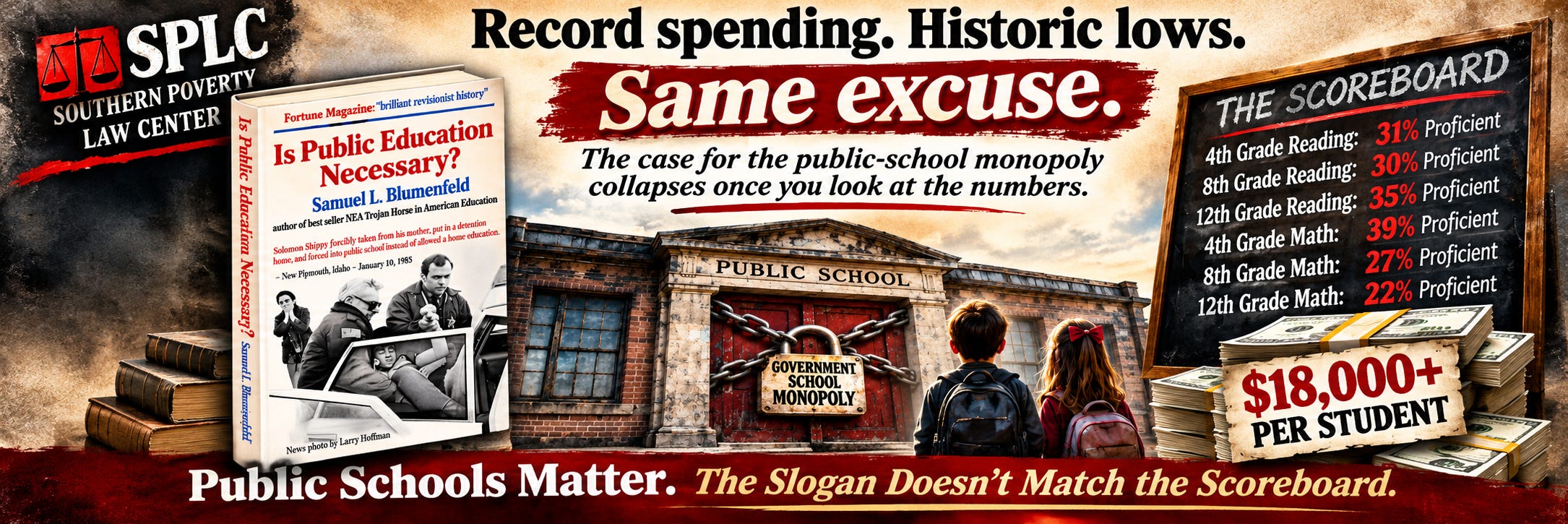
Public Schools Matter. The Slogan Doesn’t Match the Scoreboard.
The Southern Poverty Law Center put out a piece called Why Public Schools Matter.1 The pitch is simple: public schools are the heart of democracy. Choice, vouchers, private schools, and homeschooling are selfish. Education is a “public good,” not something families should pick for themselves.
While that may sound noble, it also skips the part where you look at the report card.
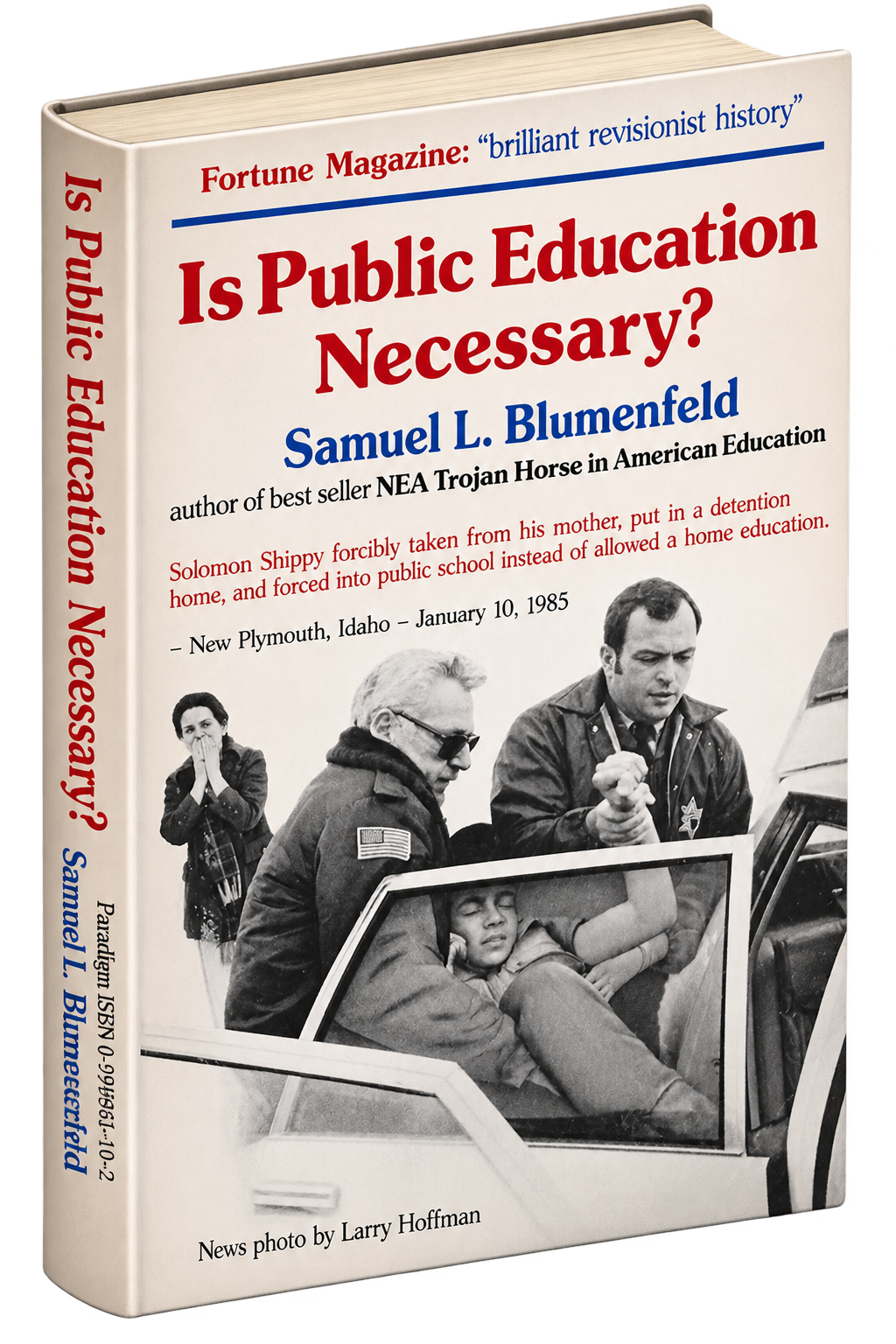
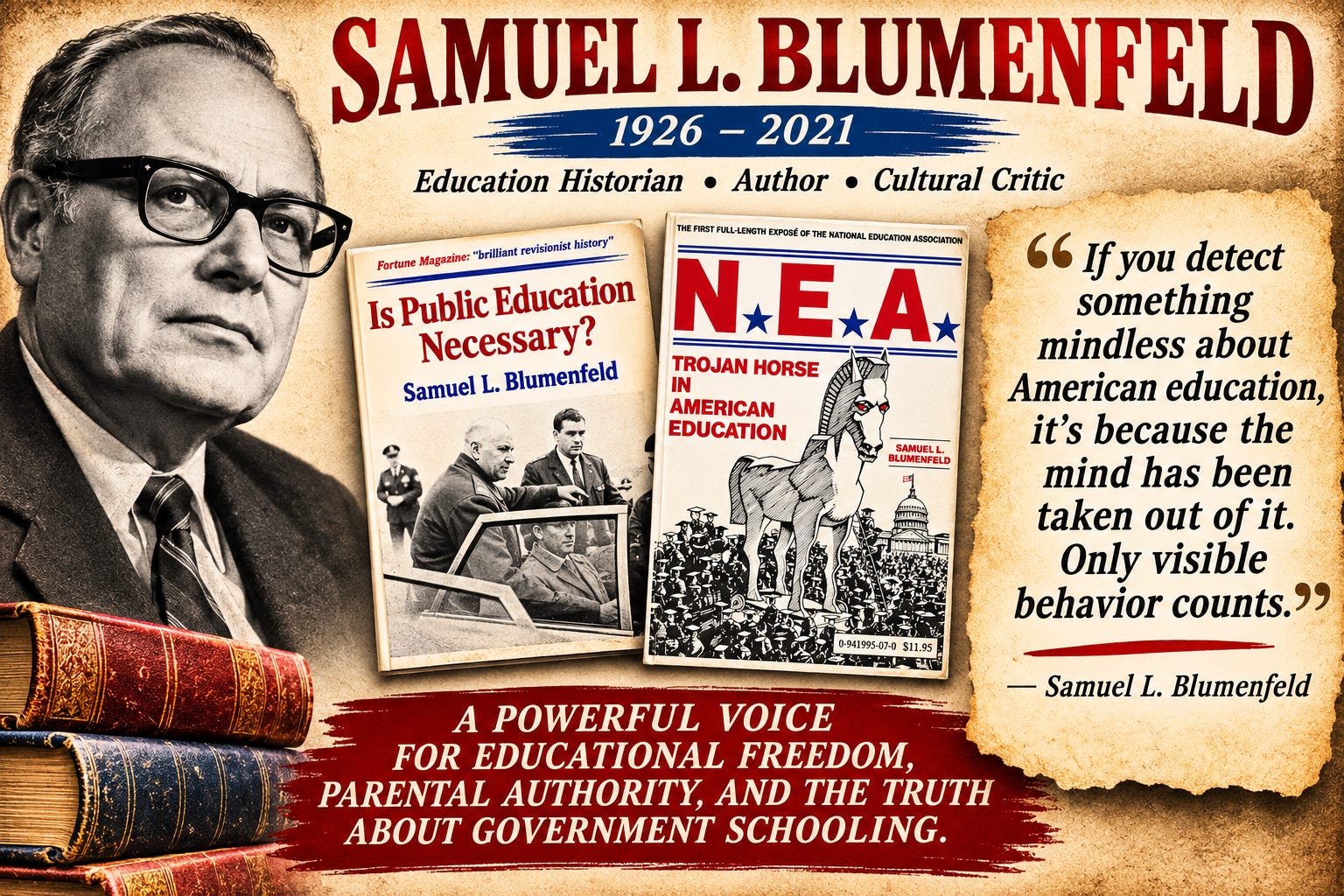
Samuel Blumenfeld spent decades saying this in plainer language: America did not need a government school monopoly to teach people to read. The system we built was as much about control as it was about books. You don’t have to love every page he wrote to notice that today’s numbers keep making his point.2
Here’s the part they do not put in the brochure.
We’re not underfunding this thing
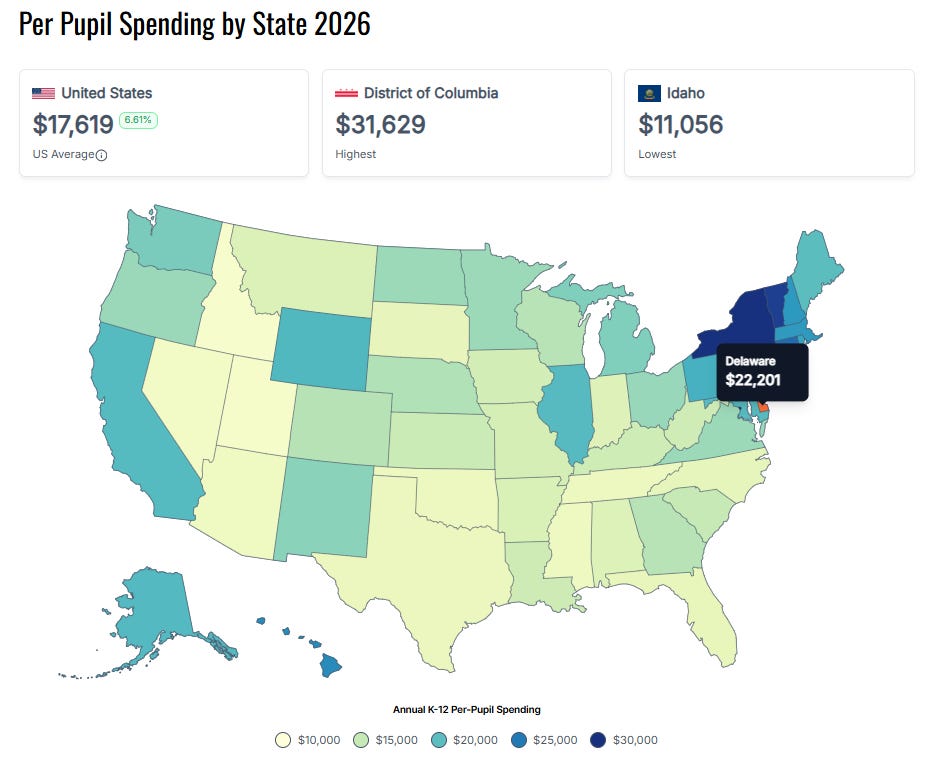
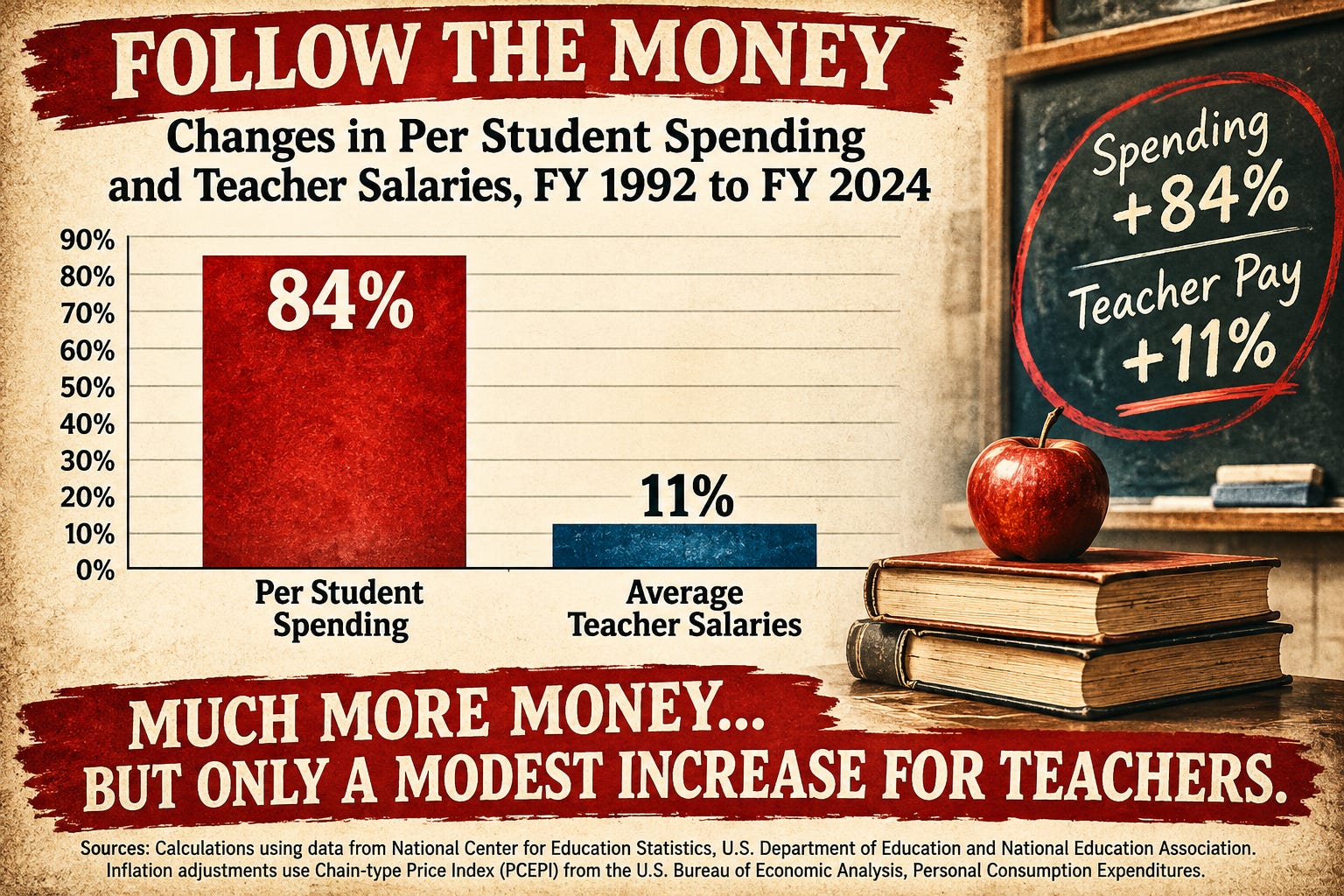
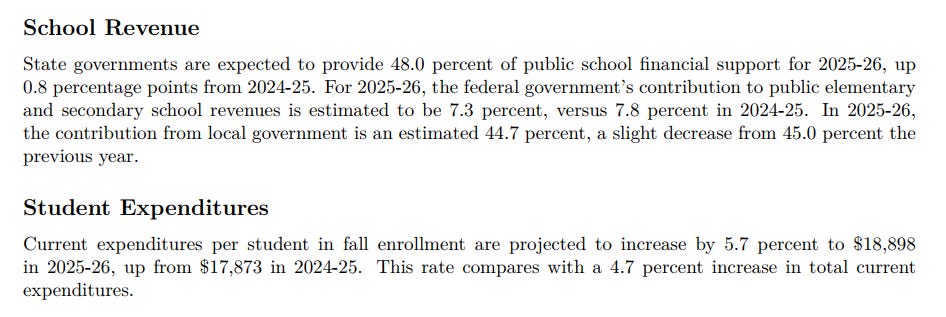
In FY 2024, public schools spent $17,619 per student. That’s a record.3 NEA estimates put 2024–25 near $17,873 and project $18,898 for 2025–26.4 Delaware is already north of $22,000.5
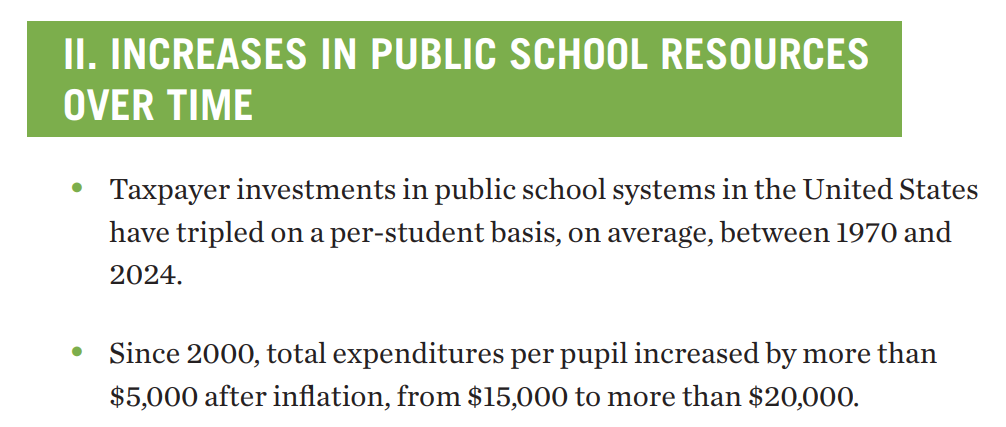
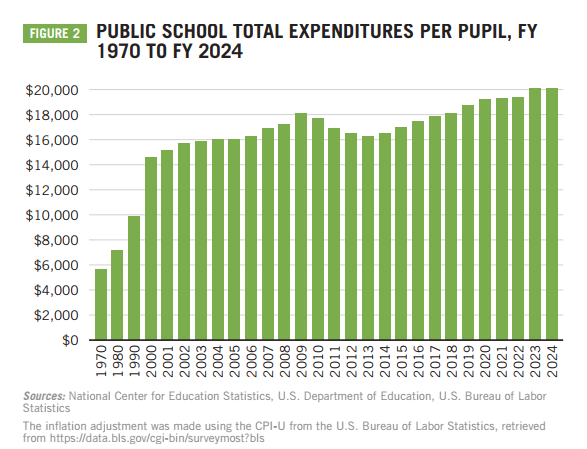
Since 1970, real spending per student has roughly tripled. Since 2000, it’s up more than $5,000 after inflation.6
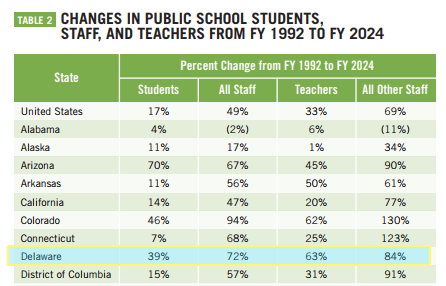
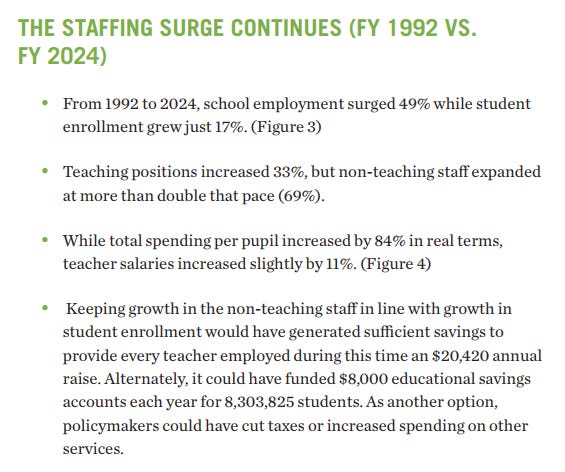
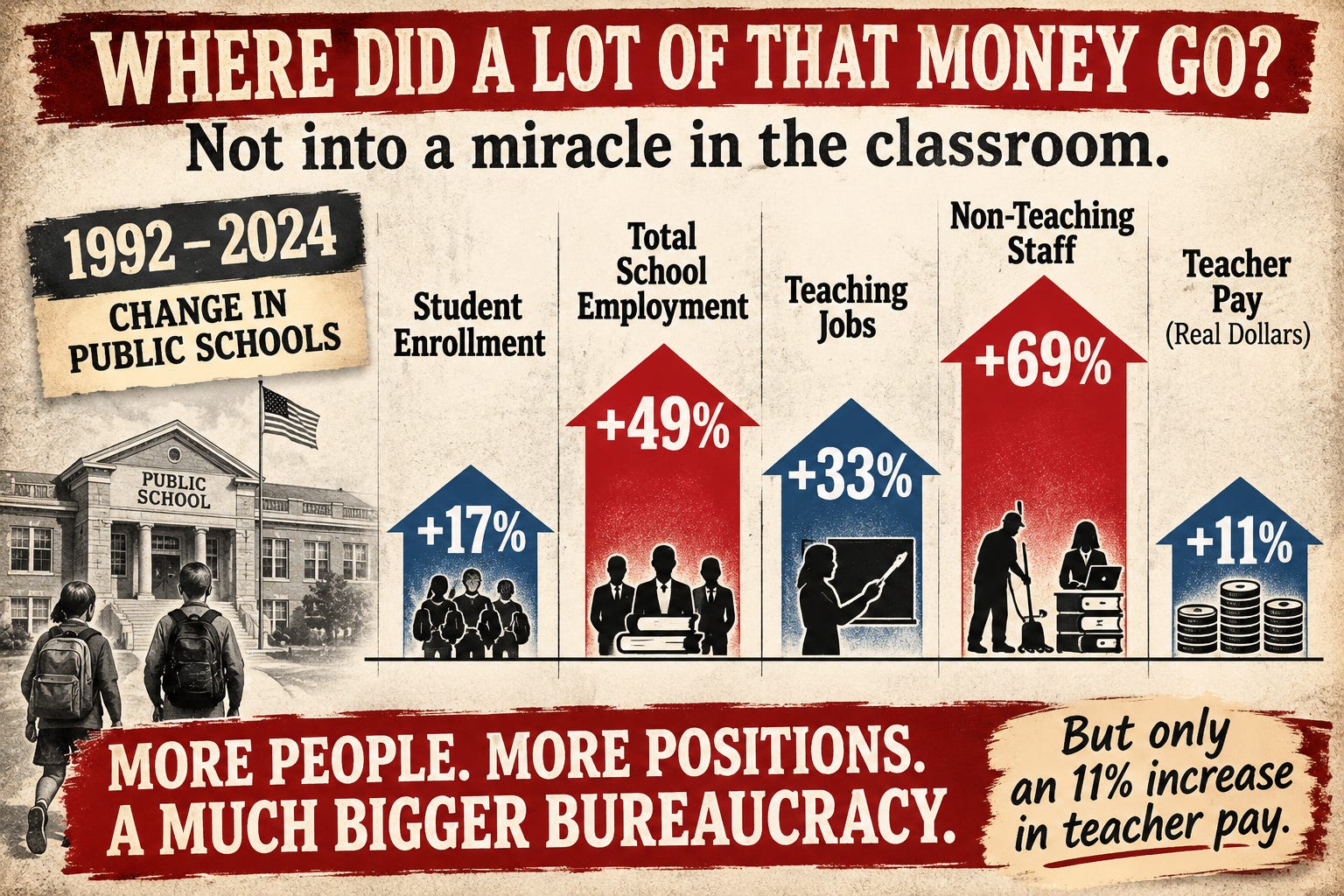
Where did a lot of that money go? Not into a miracle in the classroom. From 1992 to 2024, student enrollment grew 17 percent. School employment grew 49 percent. Teaching jobs went up 33 percent. Non-teaching staff went up 69 percent. Teacher pay, in real dollars, barely moved—about 11 percent.
More adults. More offices. Same argument: “just fund us.”
High-spend cities are not the exception. Large urban districts can spend $25,000–$35,000 per pupil and still have huge shares of eighth graders stuck at basic or below.7
Most kids still aren’t proficient
The Nation’s Report Card (NAEP) is the test the government uses when it wants to know what students actually know.
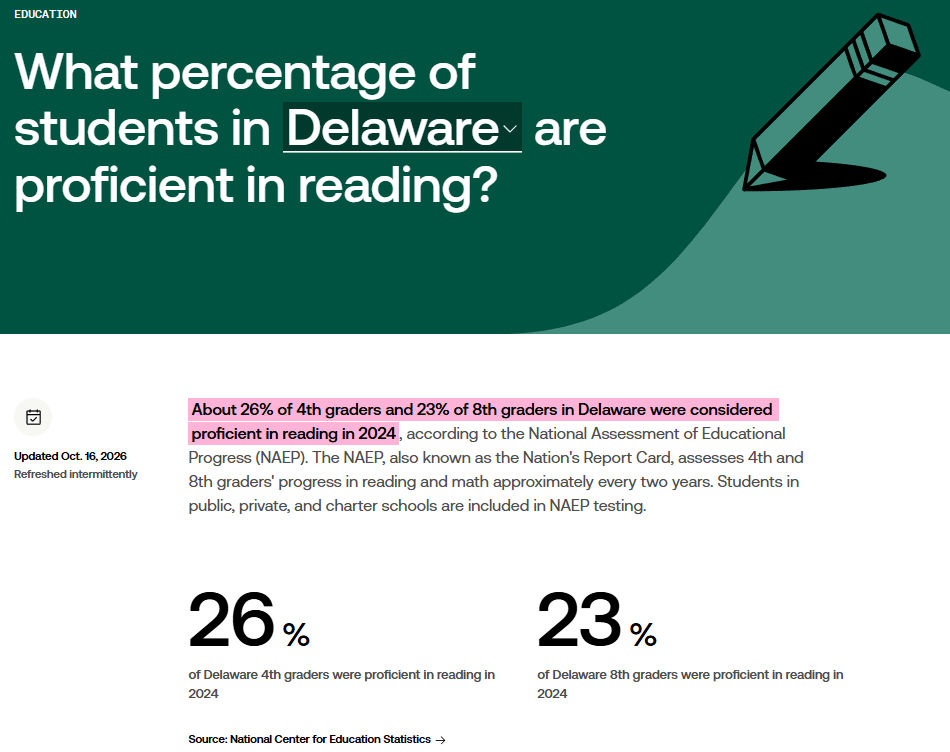
4th grade reading: 31 percent proficient
8th grade reading: 30 percent proficient
12th grade reading: 35 percent proficient
4th grade math: 39 percent proficient
8th grade math: 27 percent proficient
12th grade math: 22 percent proficient
That means about 7 out of 10 fourth and eighth graders are at “basic” or below in reading.
Twelfth-grade reading in 2024 was the lowest since that test began in 1992. One in three seniors scored below basic. They struggle to find details in a passage. Only a third of seniors were judged ready for college-level math.10
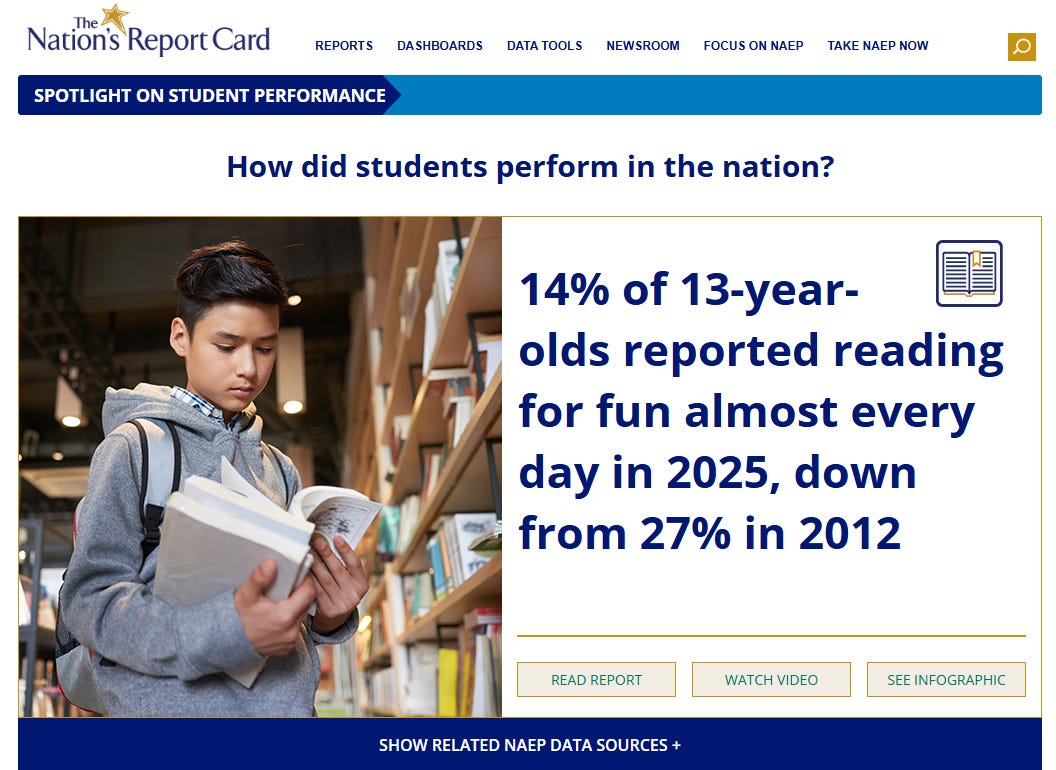
In 2025, nine-year-olds ticked up a little from the COVID bottom.11 Thirteen-year-olds didn’t. They’re still below 2020. Daily reading for fun among 13-year-olds fell from 27 percent in 2012 to 14 percent. Algebra-taking at that age fell from 34 percent to 23 percent.12
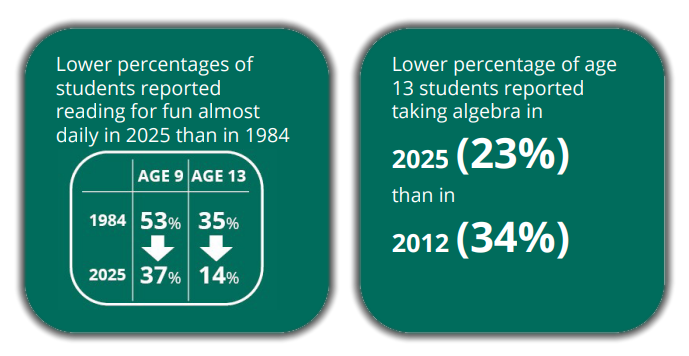
Math is crawling back; reading is not.13
If public school is the “cornerstone of democracy,” the cornerstone is cracked. Literacy is the skill they name first. That’s the skill that’s sliding.
The world test just said the same thing
PISA tests 15-year-olds in wealthy countries. New scores dropped September 8, 2026.14 15 16
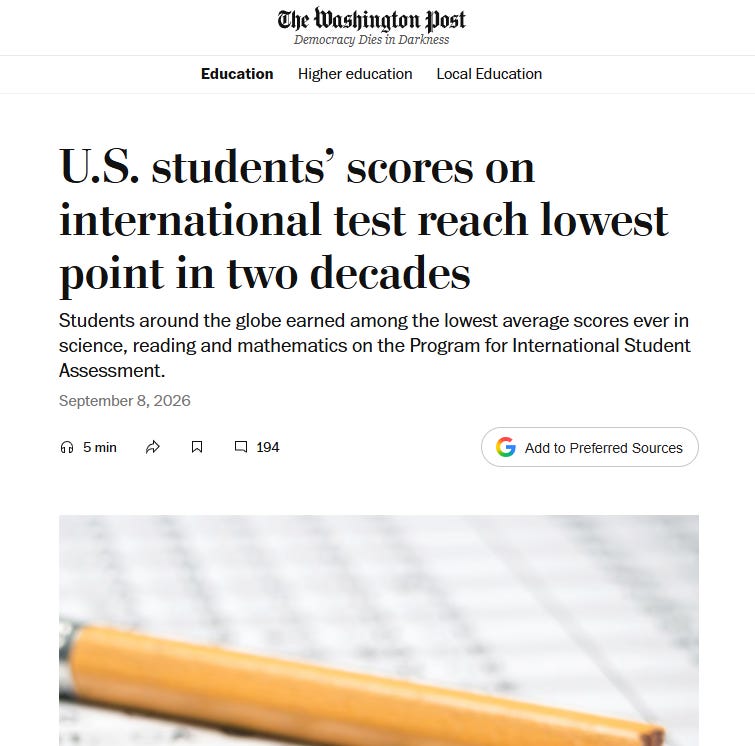
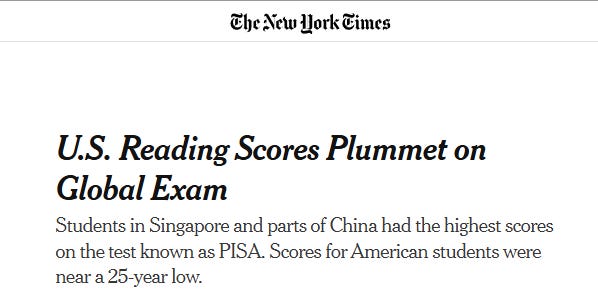
U.S. reading: 490 — down 14 points since 2022. Lowest U.S. PISA reading score since we started taking the test.
Math: 463 — dead even with the average.
Science: 502 — a bit above average, basically flat.
Only 8 percent of American 15-year-olds hit the top math levels. Singapore: 37%. Korea: 23%. Japan: 22%.
The U.S. ranking improved partly because other countries fell faster—not because we surged.17
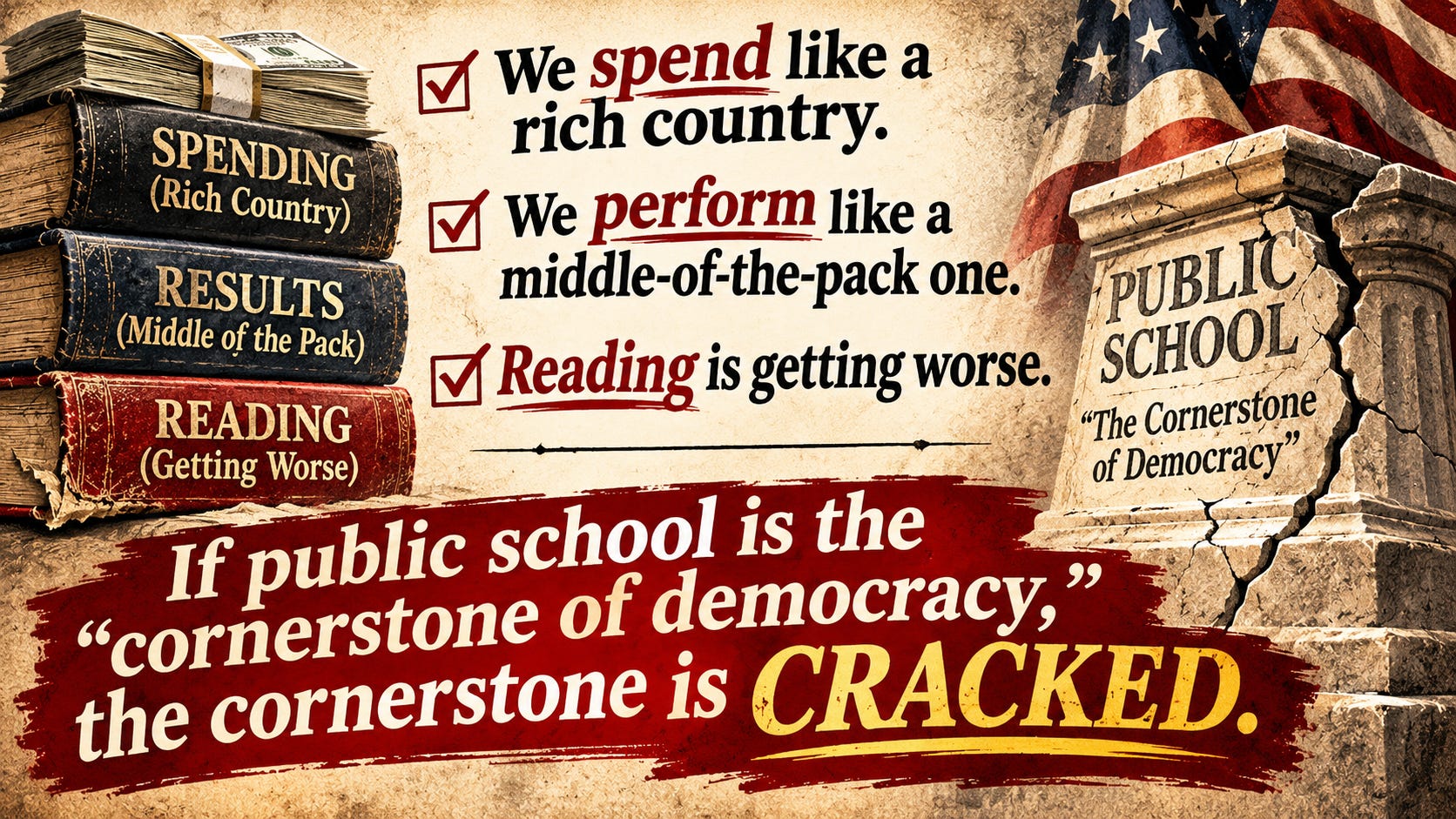
We spend like a rich country. We perform like a middle-of-the-pack one. Reading is getting worse.
We could read before Horace Mann
The SPLC line is that public school is how America learned to read and become a republic.
That’s the founding myth. It isn’t the founding record.
In New England, male literacy was already heading toward 90 percent by the late 1700s: family, church, tutors, dame schools, private academies. Northern literacy in the early 1800s was already high. Massachusetts was near 98 percent before compulsory schooling.18 19 20 21


Horace Mann didn’t invent American literacy. He centralized it. He studied Prussia. Graded classrooms. State-trained teachers. “Nonsectarian” moral lessons. The pitch was unity and order. The product was a system that assigned your child by zip code and told you it was democracy.
Blumenfeld’s question still stands: if families and churches were already teaching people to read, why did the state need a monopoly?
Choice is not a fire truck scam
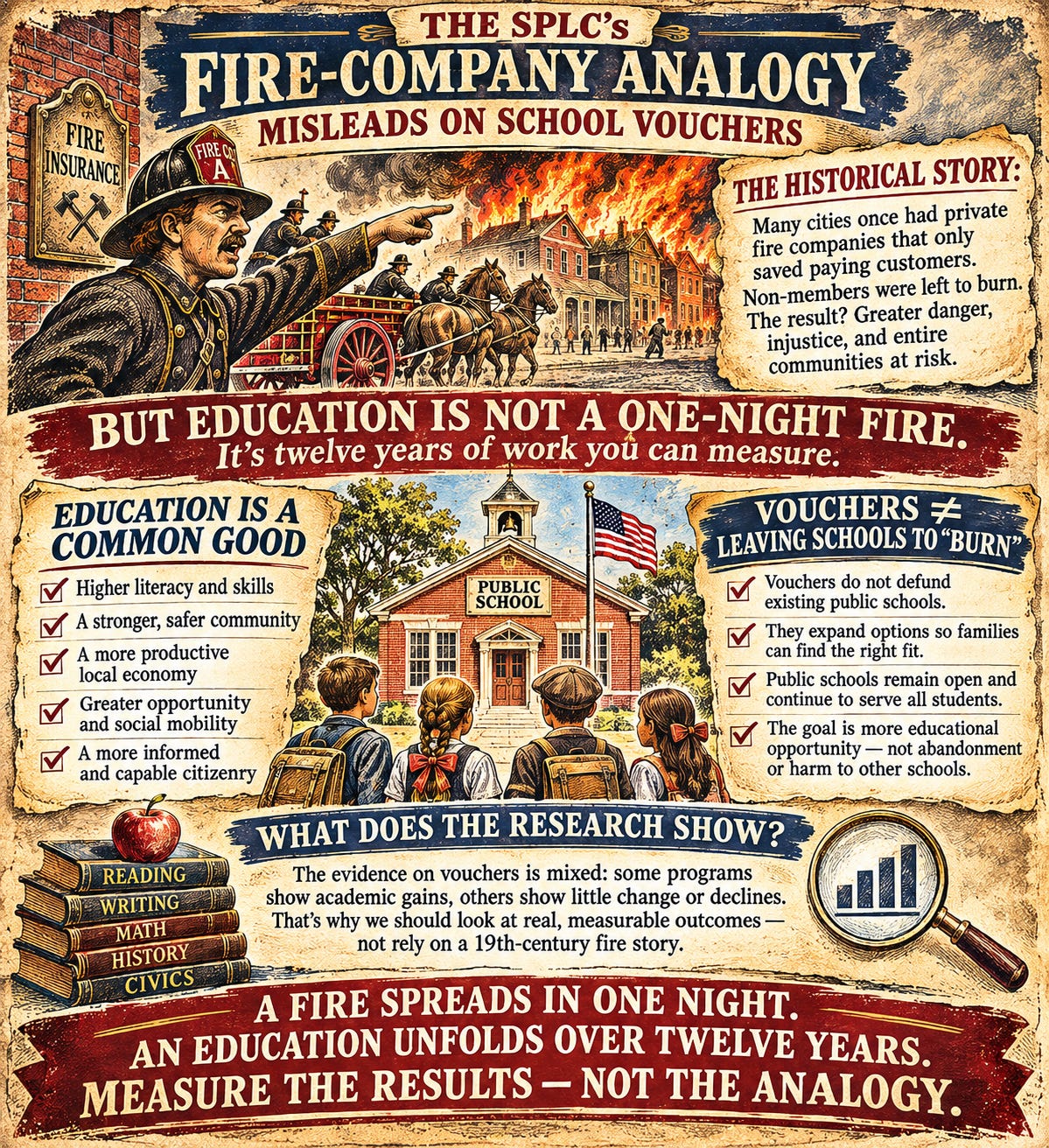
The SPLC uses an old fire-company story: private firefighters only saved paying houses, so the town burned. Therefore vouchers are dangerous.
Education is not a one-night fire. It’s twelve years of work you can measure.
What does the research actually show?
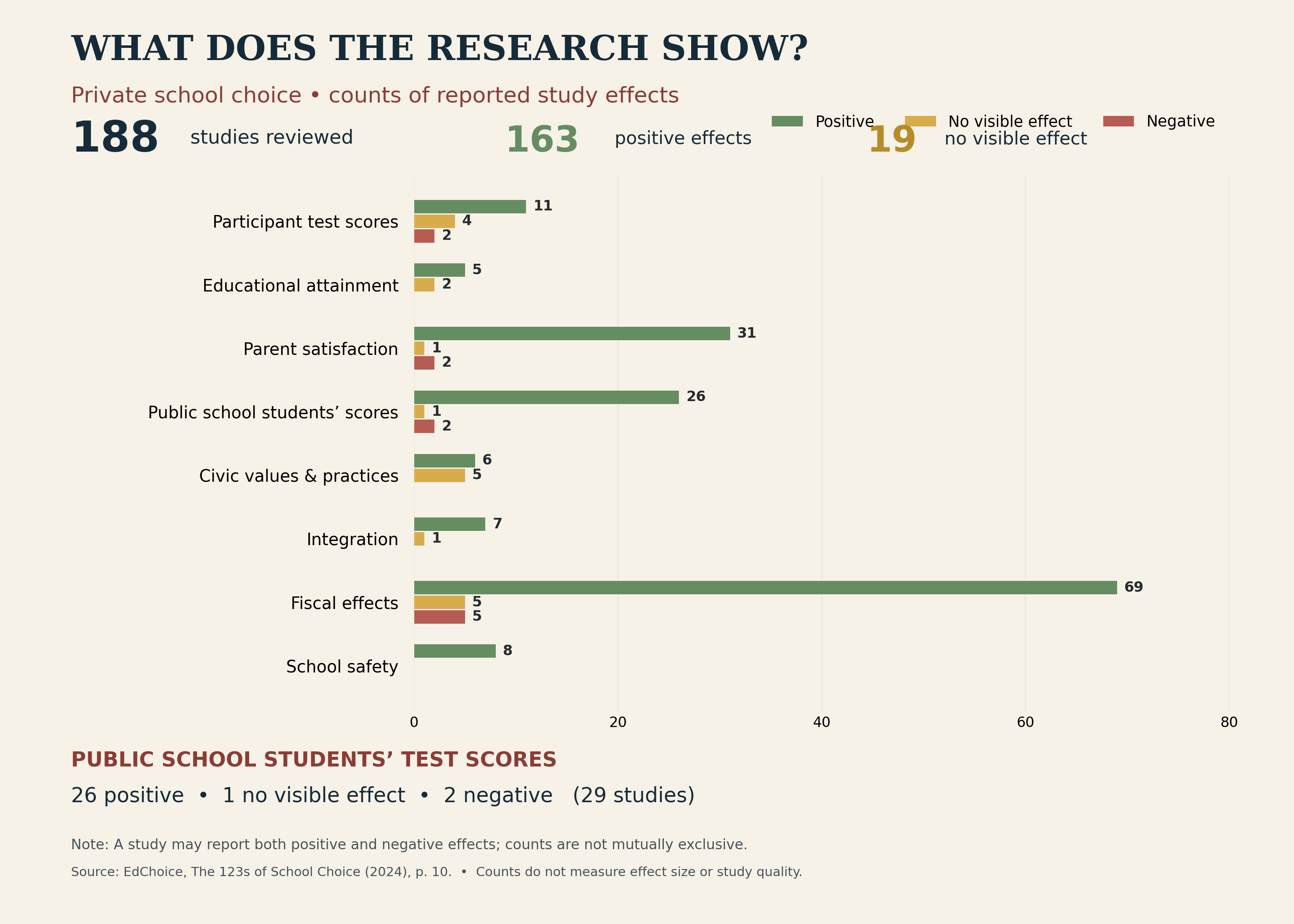
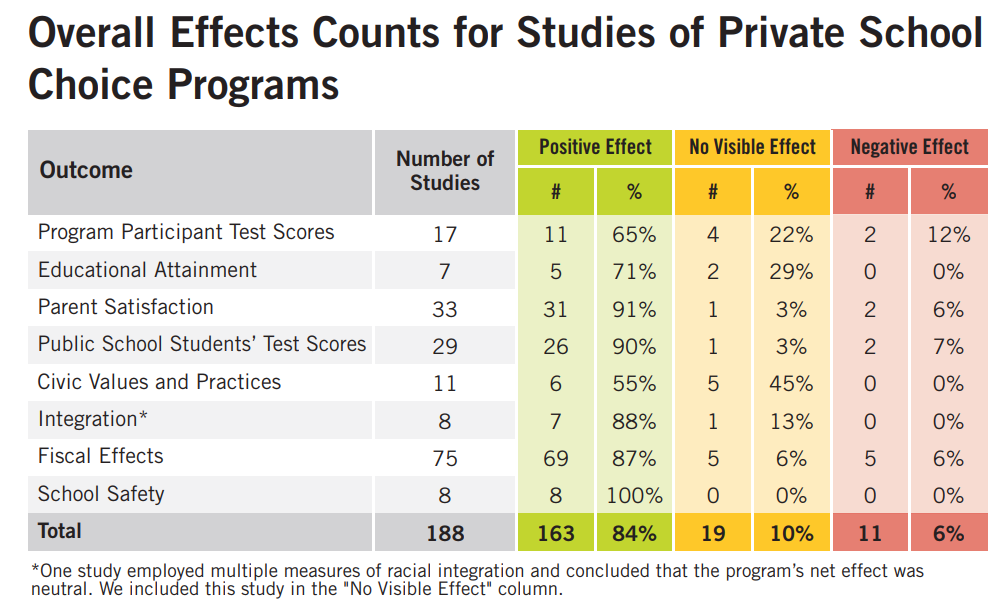
EdChoice’s 2026 research review found 84 percent of the broader choice studies with a positive effect and 6 percent negative. Of 29 studies on kids who stayed in public school after choice arrived, 26 found those public-school kids did better.22 More detail is in their 123s compilation.23
Test scores for voucher users are the mixed part. Early city lotteries often showed small gains. Some later statewide programs showed flat or even down scores at first, especially in math. Parent satisfaction, graduation, and civic measures run better. Achievement results mixed; non-test outcomes neutral to positive.24
That’s not “privatization destroyed democracy.” That’s “design matters, and families notice quality faster than a press release does.”
Homeschooling is the option they fold into the villain pile.
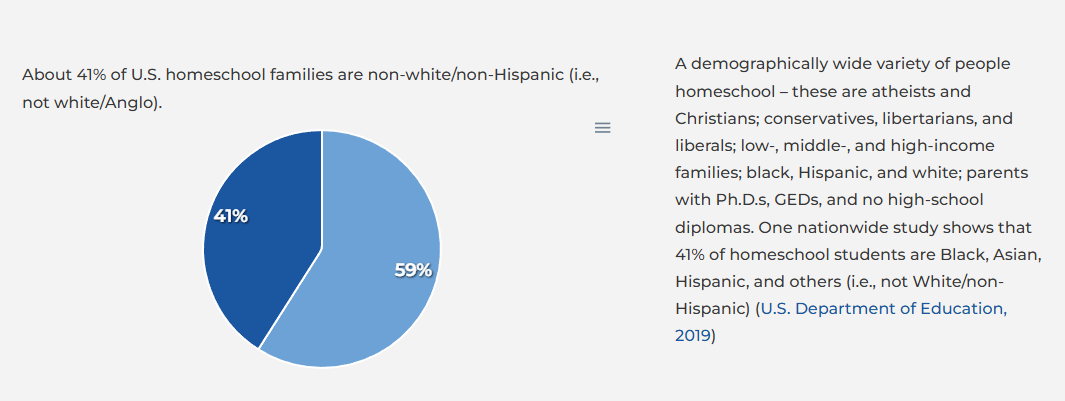
About 3.4 million kids were homeschooled in 2024–25, up from 2.5 million in 2019.25 Most reporting states were still rising last year.26
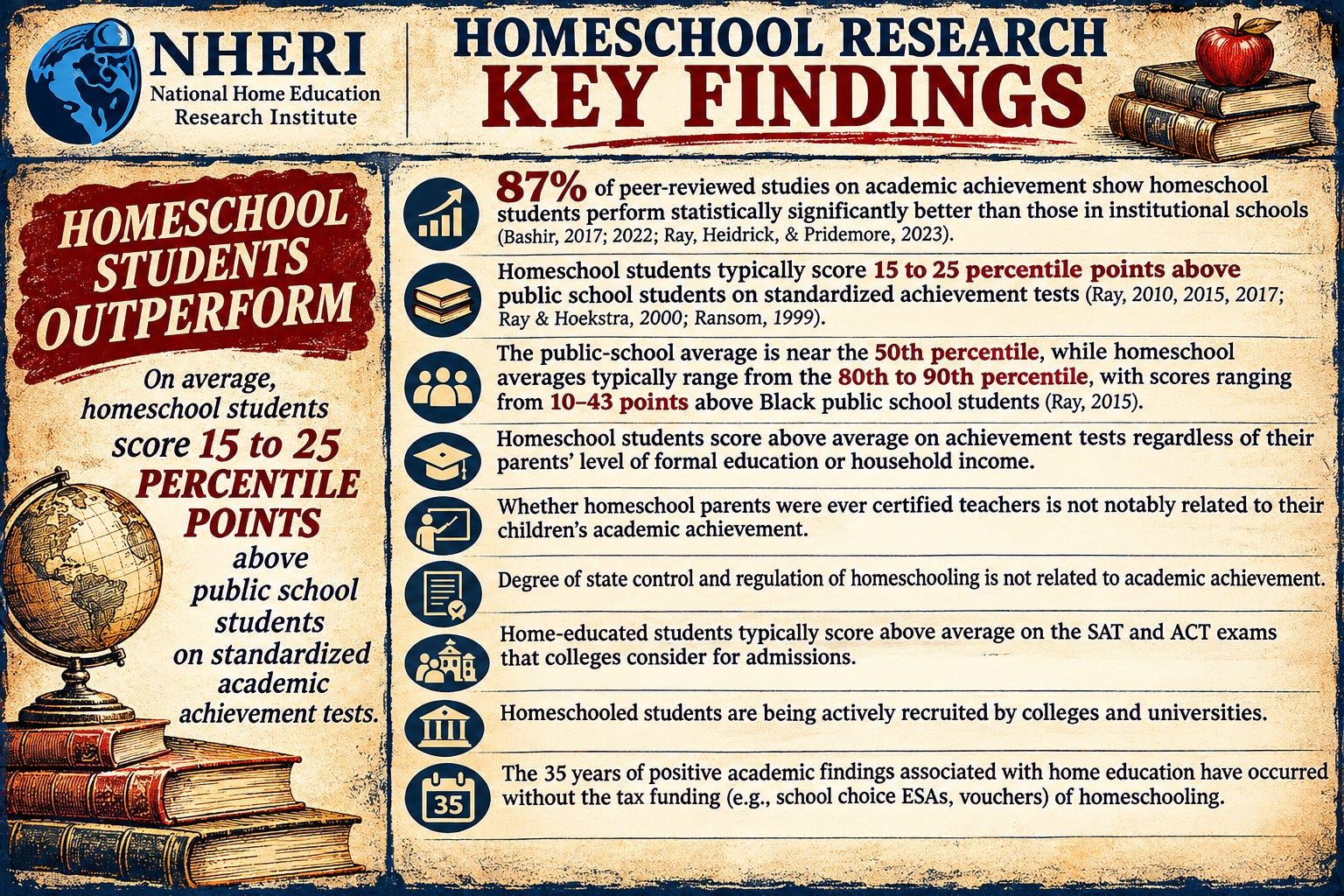
On standardized tests, homeschool students typically land 15 to 25 percentile points above the public-school average.27 A 2026 nationwide study put them around the 75th to 79th percentile.28 Most peer-reviewed studies find an academic edge.29
Be honest about the caveat: homeschool families are not a random sample. Motivated parents change the picture. That doesn’t erase the point. Millions of people already voted with their feet. They didn’t wait for SPLC to define “the common good.”
What the slogan has to hide
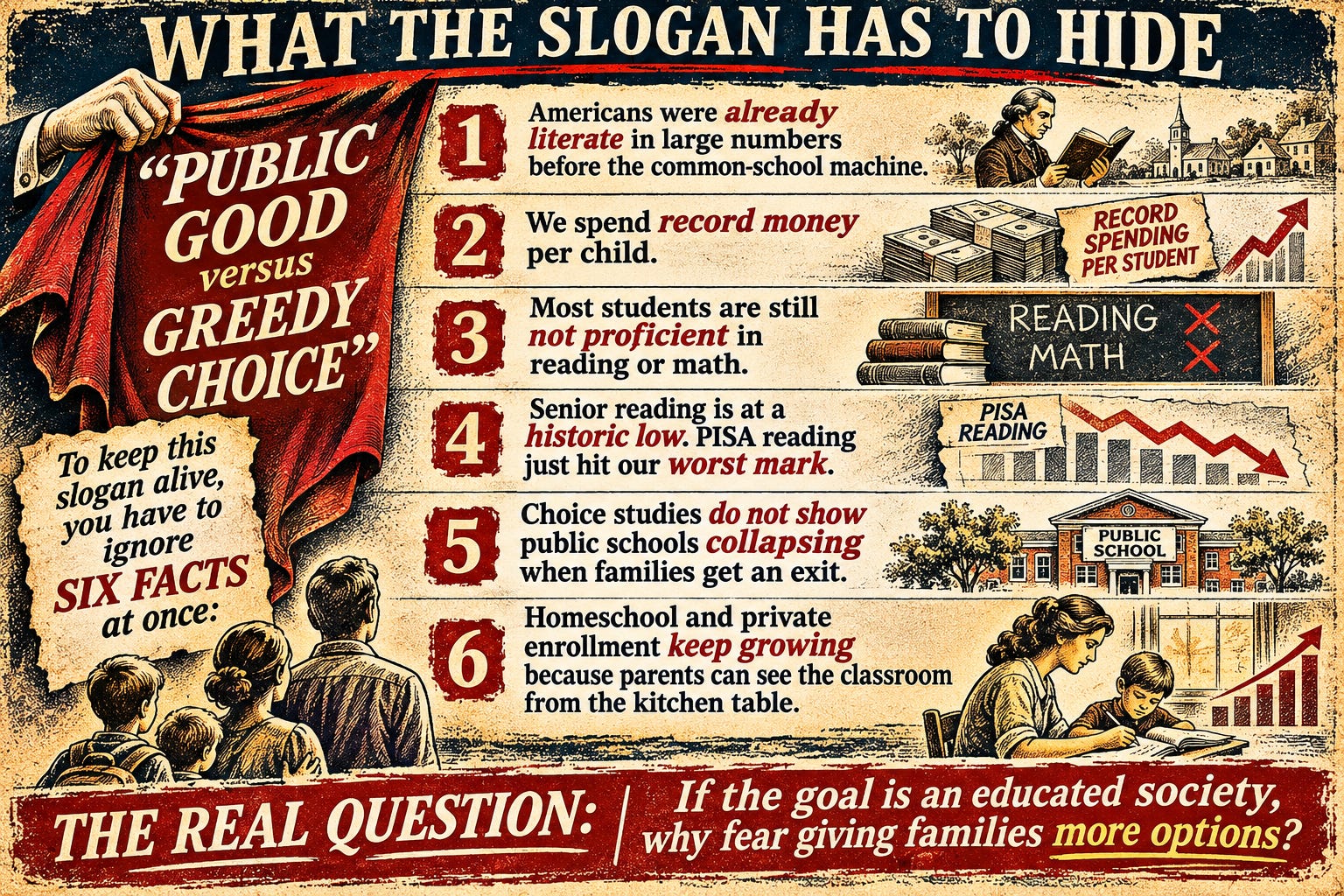
To keep “public good versus greedy choice” alive, you have to ignore six facts at once:
Americans were already literate in large numbers before the common-school machine.
We spend record money per child.
Most students are still not proficient in reading or math.
Senior reading is at a historic low. PISA reading just hit our worst mark.
Choice studies do not show public schools collapsing when families get an exit.
Homeschool and private enrollment keep growing because parents can see the classroom from the kitchen table.
Thomas Sowell’s habit is useful here. Don’t argue with the poetry. Ask what the trade-off is. The trade-off in the SPLC essay is this: protect the system’s monopoly, and treat parent exit as an attack on democracy.
A school that teaches a child to read, count, and tell the truth is a public blessing. A system that spends $18,000 a year, leaves most kids below proficient, and then calls the parent the problem is not a sacrament. It’s a vendor with a captive customer.
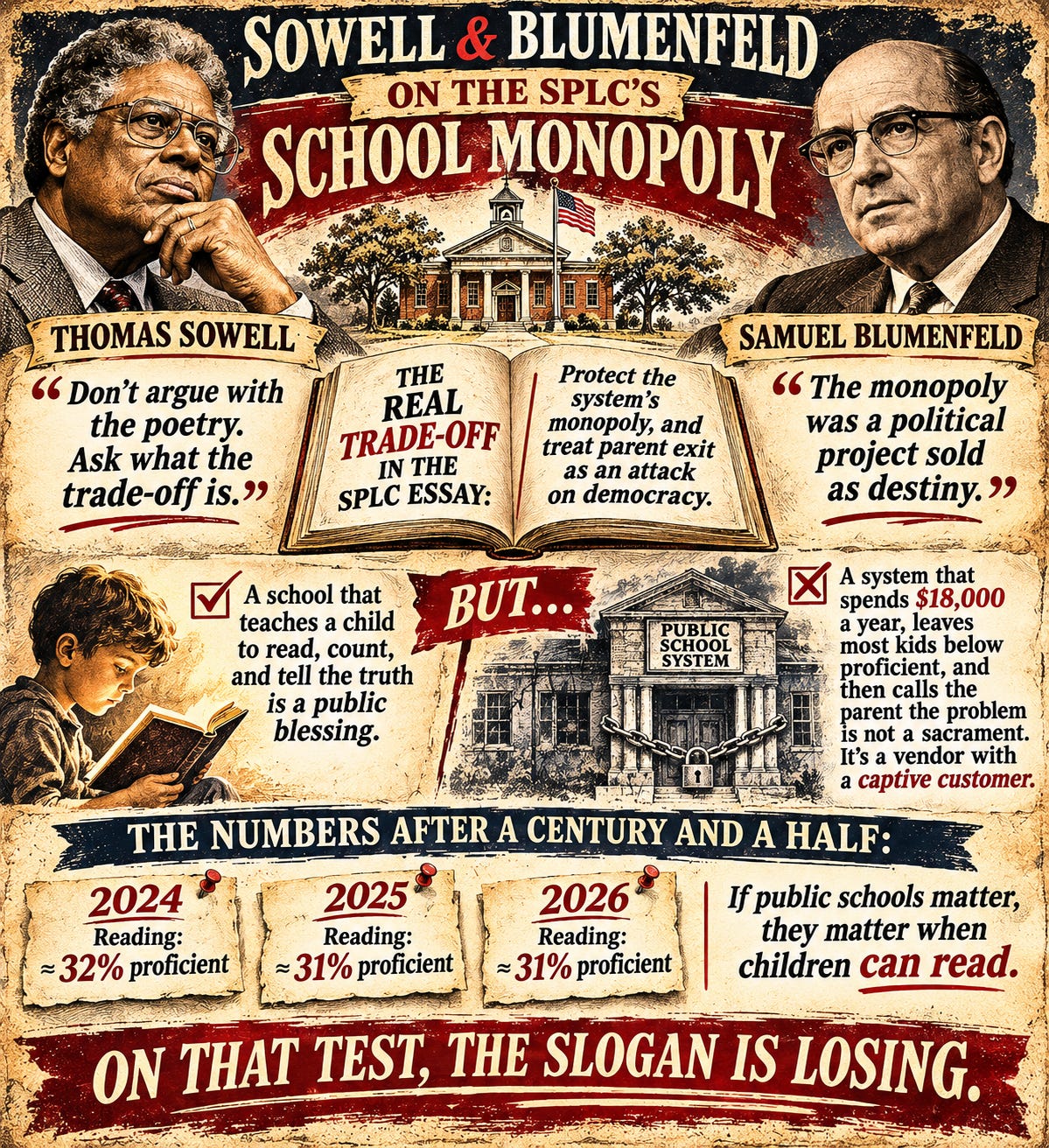
Blumenfeld said the monopoly was a political project sold as destiny. The 2024, 2025, and brand-new 2026 numbers are what that project looks like after a century and a half.
If public schools matter, they matter when children can read. On that test, the slogan is losing.
A doo-wop style call from Delaware parents to Governor Matt Meyer.
The song calls out the old factory-model school system that teaches kids what to think instead of how to think. It highlights low reading scores, union politics in the hallways, and the need for real choice — private school, church school, or homeschool.
Core message:
It’s your child. You should be free to choose what’s best.
The hook keeps asking the governor one thing:
Matt Meyer, sign it! Don’t you walk away.
Parents in Delaware now have a concrete way to back that up.
A new federal Scholarship Tax Credit could bring an estimated $40 million a year in private scholarships to Delaware students for tuition, tutoring, curriculum, therapies, and more. The state must opt in or the money goes to other states.
Sign the petition and urge Governor Meyer to open the gate:
https://www.caesarrodney.org/scholarships-petition
Share it with other Delaware parents. The more voices, the harder it is to ignore.
Kathy Barnette held her 2nd Annual F3 Forum: Faith • Family • Future of Education in America.


Southern Poverty Law Center, “Why Public Schools Matter.”
https://www.splcenter.org/resources/stories/why-public-schools-matter
Samuel L. Blumenfeld, “Why the Schools Went Public,” Reason, March 1979.
https://reason.com/1979/03/01/why-the-schools-went-public
See also the review of Is Public Education Necessary? at FEE.
https://fee.org/articles/a-reviewers-notebook-is-public-education-necessary-2
U.S. Census Bureau, “Public School Spending Per Pupil Reaches Historic High in 2024,” May 7, 2026.
https://www.census.gov/newsroom/press-releases/2026/school-system-finances.html
National Education Association, Rankings and Estimates Report, August 2026 update.
https://www.nea.org/sites/default/files/2026-08/2026-rankings-and-estimates-report-august-update.pdf
World Population Review, “Per Pupil Spending by State 2026.”
https://worldpopulationreview.com/state-rankings/per-pupil-spending-by-state
EdChoice, Fiscal Factbook (2026)
https://www.edchoice.org/wp-content/uploads/2026/07/Fiscal-Factbook-WEB.pdf
“5 Big-City Public Schools Spend Billions More but Students Learning Less,” Washington Stand, May 2026
https://washingtonstand.com/article/5-bigcity-public-schools-spend-billions-more-but-students-learning-less
USAFacts, “What percentage of students in the US are proficient in reading?”
https://usafacts.org/answers/what-percentage-of-students-in-the-us-are-proficient-in-reading
FutureEd, “The New NAEP Scores Highlight a Standards Gap in Many States.”
https://www.future-ed.org/the-new-naep-scores-highlight-a-standards-gap-in-many-states

Associated Press, “High school students’ scores fall in reading and math,” September 9, 2025
https://apnews.com/article/naep-reading-math-scores-12th-grade-c18d6e3fbc125f12948cc70cb85a520a
National Center for Education Statistics, NAEP Long-Term Trend Assessment Results (2025)
https://www.nationsreportcard.gov/ltt/2025
National Assessment Governing Board, “NAEP Long-Term Trend.”
https://www.nagb.gov/naep/long-term-trend.html
Brookings Institution, “5 years after COVID-19 hit: Test data converge on math gains, stalled reading recovery,” March 18, 2025
https://www.brookings.edu/articles/5-years-after-covid-19-hit-test-data-converge-on-math-gains-stalled-reading-recovery
OECD, PISA 2025 Country Profile – United States
https://gpseducation.oecd.org/CountryProfile?primaryCountry=USA&topic=PI
Sarah Mervosh, “U.S. Reading Scores Plummet on Global Exam,” New York Times, September 8, 2026
https://www.nytimes.com/2026/09/08/us/us-reading-test-scores-pisa.html
alt https://archive.is/nKJbQ
Washington Post, “U.S. students’ scores on international test reach lowest point in two decades,” September 8, 2026
https://www.washingtonpost.com/education/2026/09/08/us-falls-new-low-international-tests-dissatisfaction-with-k-12-grows
Chalkbeat, “U.S. ranking on PISA international test improves as other countries decline,” September 8, 2026
https://www.chalkbeat.org/2026/09/08/pisa-results-2025-show-us-gaining-as-other-countries-decline
Sheldon Richman, “The Spread of Education Before Compulsion,” Independent Institute, July 1, 1996
https://www.independent.org/article/1996/07/01/the-spread-of-education-before-compulsion
Foundation for Economic Education, “Did Public Schools Really Improve American Literacy?” September 13, 2016
https://fee.org/articles/did-public-schools-really-improve-american-literacy
Heidelblog, “Did Public Education Really Introduce Mass Literacy?” February 22, 2021
https://heidelblog.net/2021/02/did-public-education-really-introduce-mass-literacy
Colonial Williamsburg, “Every Man Able to Read.”
https://research.colonialwilliamsburg.org/Foundation/journal/Winter11/literacy.cfm
EdChoice, “Here’s What the Research Really Says About School Choice in 2026,” June 23, 2026
https://www.edchoice.org/heres-what-the-research-really-says-about-school-choice-in-2026
EdChoice, The 123s of School Choice (ERIC PDF)
AEFP Live Handbook, “Vouchers/ESAs.”
https://livehandbook.org/k-12-education/market-based-schooling/vouchers-esas
National Home Education Research Institute, “Fast Facts on Homeschooling.”
https://nheri.org/research-facts-on-homeschooling
Angela R. Watson, “Homeschool Growth: 2024-2025,” Johns Hopkins University
https://education.jhu.edu/edpolicy/policy-research-initiatives/homeschool-hub/homeschool-growth-2024-2025
National Home Education Research Institute, “Homeschool Academic Achievement Fact Sheet.”
https://nheri.org/homeschool-academic-achievement-fact-sheet
Brian D. Ray & Braden Hoelzle, “A Nationwide Study on the Academic Achievement of Homeschool Students…,” Peabody Journal of Education, 2026
https://www.tandfonline.com/doi/full/10.1080/0161956X.2025.2605901
NYS LEAH summary of NHERI academic achievement study
https://www.leah.org/education/nheris-academic-achievement-study